2 History and evolution of Robotics-I#
October 11, 2024
The evolution of robotics is a captivating saga, marked by a series of remarkable events, groundbreaking technological advancements, and disruptive paradigm shifts. Over time, robotics has seamlessly interlaced into numerous aspects of human life, profoundly influencing our lifestyles and habits. This section showcases a blend of innovation and adaptation, highlighting how robotics has progressed from rudimentary mechanisms to sophisticated systems that now play a crucial role in everyday activities and various industries. In this article the ancient and medieval history is covered. Modern history of robotics will be covered in the following articles. If you have not visited the previous article on “Definition of Robotics and Robot” then you can click here for understanding the basics of the robotics and robots.
2.1 Early Concepts and Foundations#
The concept of artificial beings and companion dates back to ancient mythology and literature. Legends such as Cadmus, whose dragon teeth transformed into soldiers, and Pygmalion, whose statue Galatea came to life, reflect early imaginations of mechanized entities. Ancient Greek mythology includes the Golden Maidens, mechanical handmaidens crafted by Hephaestus from gold. Similarly, the Buddhist scholar Daoxuan described humanoid automata in his time, noting their ability to recite sacred texts and even weep for Buddha.
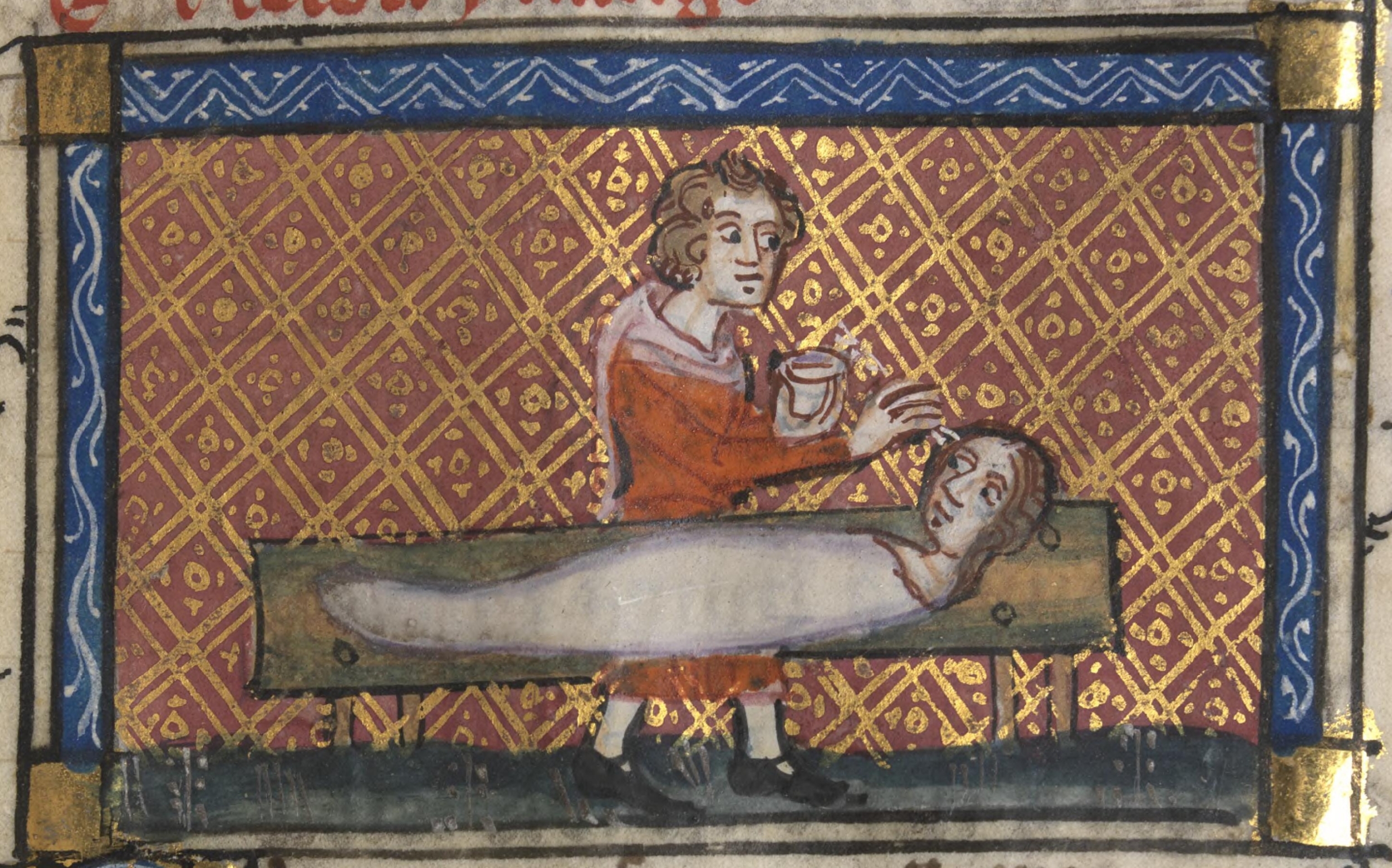
Pygmalion’s story, working on his sculpture (Source: National Library of Wales)#
In Chinese lore, figures like the legendary carpenter Lu Ban and philosopher Mozi created mechanical replicas of animals and mythical beings. The Daoist text Liezi recounts a story of a lifelike automaton presented to King Mu of Zhou, which fascinated him but also led to a dramatic exploration of its inner workings. The Indian Lokapannatti narrates how automated soldiers were crafted to protect Buddhist relics, reflecting concerns about controlling artificial entities.
During the medieval period, European inventors were inspired by legends of talking heads and mechanical devices. Notable figures like Albertus Magnus and Roger Bacon were credited with creating automata, though some of their creations were lost or destroyed. These early accounts illustrate a longstanding fascination with artificial beings, blending myth and emerging technological concepts.
2.2 Ancient and Medieval Automata#
Archytas (4 BC) of Tarentum designed a steam-driven mechanical bird called “The Pigeon”. Alexandrian engineers documented workable automata powered by hydraulics or steam. Ctesibius (285-222 BC), built human-like automata, intended for religious practices. Hero of Alexandria (10-70 CE) developed an automata puppet theatre, detailing its construction in his treatise on pneumatics.
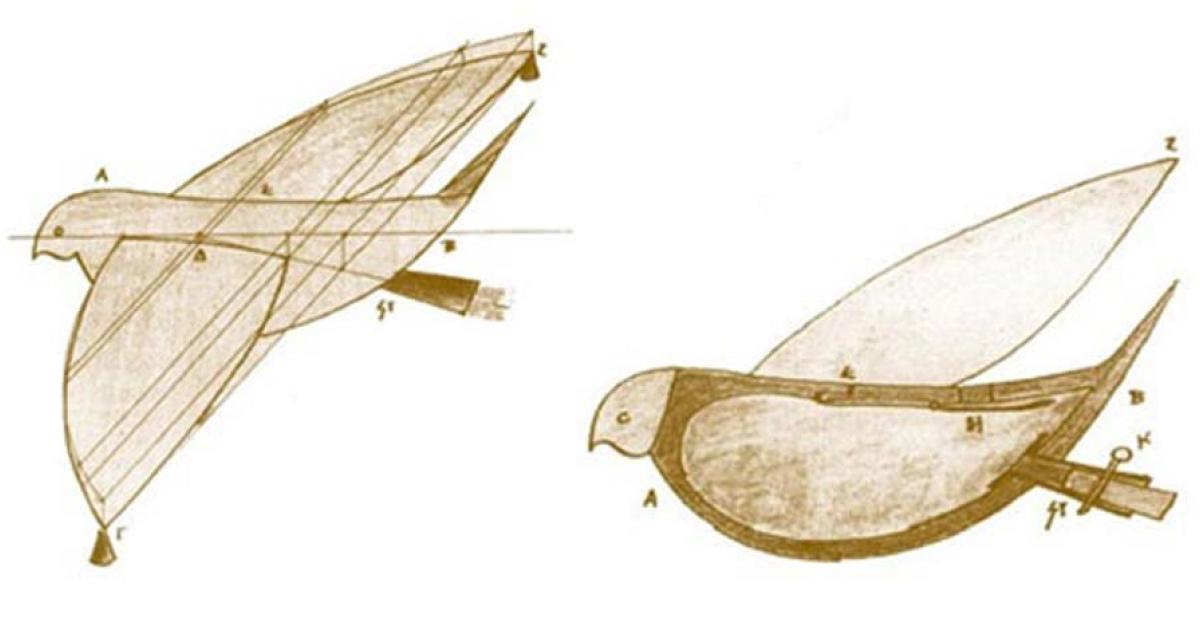
The Steam-Powered Pigeon of Archytas (Source: Ancient Origins)#
In China, Su Song in Kaifeng (1088 CE), constructed the Cosmic Engine, a 10-metre clock tower containing mechanical figures that struck gongs or bells to announce the hours. Daifeng Ma crafted an automated servant for the queen’s dressing. Ying Wenliang fashioned an automata man that proposed toasts at banquets and a wooden female automata that played the sheng.
Post-classical societies, particularly the Byzantines and Arabs, made significant strides in automata, notably through the development of water clocks with intricate gear systems. Harun al-Rashid commissioned sophisticated water clocks featuring hydraulic jacks and animated human figures. Innovators like Banu Musa and Al-Jazari contributed to this field by publishing influential treatises on hydraulics and enhancing the design of water clocks.
Al-Jazari, in particular, created remarkable automata, including moving peacocks powered by water. He also designed a water wheel with cams that operated various automata. Among his inventions was a humanoid automaton that served drinks, demonstrating advanced engineering for its time. Notably, he developed a hand-washing automaton with a flush mechanism, resembling modern toilets. This device featured a female figure next to a basin, refilling it automatically when a lever was pulled.
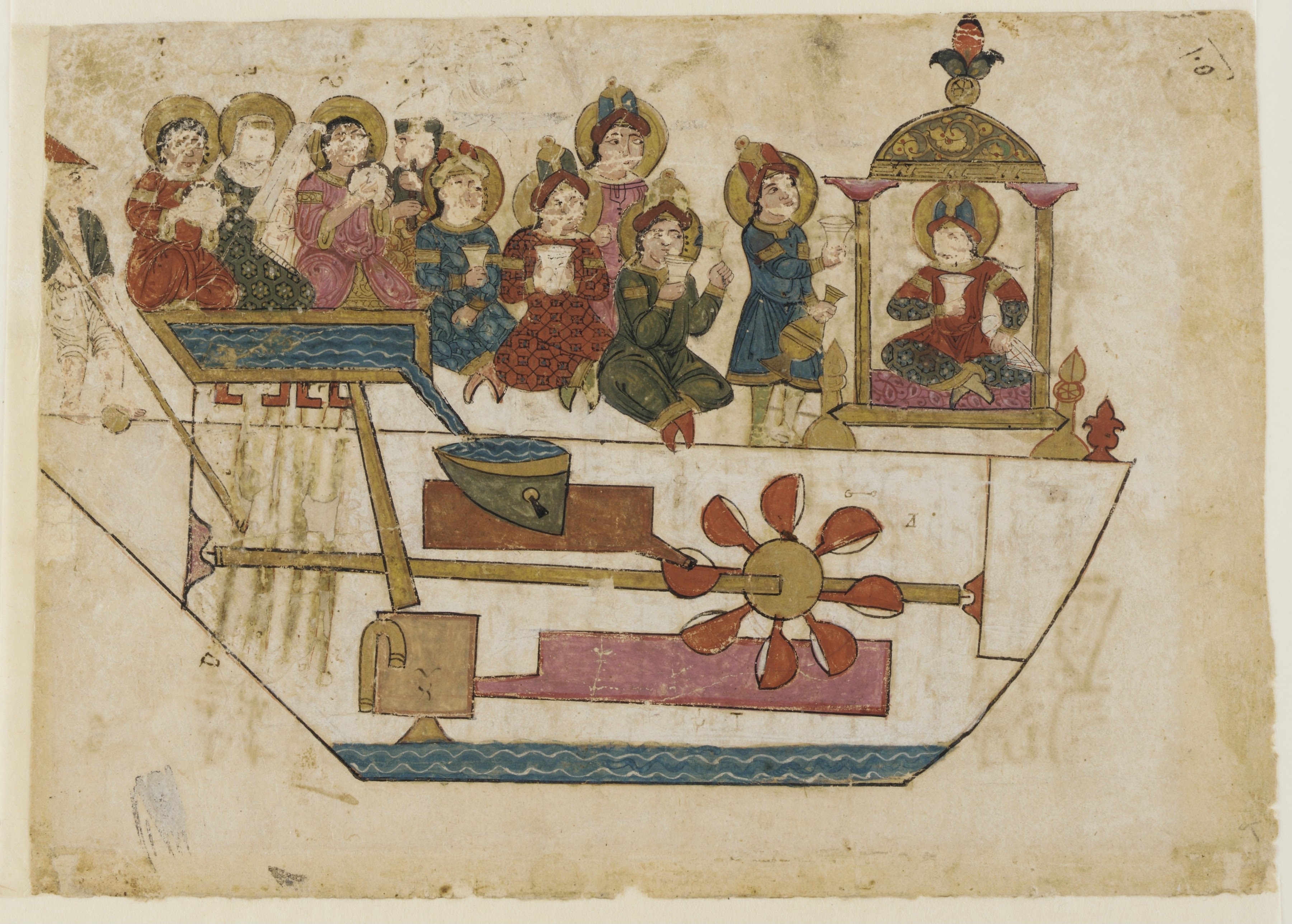
Automata by al-Jazari (d.1206): A musical toy in the form of a boat (Source: The book of knowledge of Ingenious Mechanical Devices- Automata by al-Jazari)#
Additionally, Al-Jazari crafted a robotic musical ensemble. The segmental gears detailed in his seminal work, “The Book of Knowledge of Ingenious Mechanical Devices,” would later influence European clock-making about a century later. His writings also included detailed instructions for building humanoid automata. The first European water clocks inspired by Arabic designs emerged around 1000 CE, likely resulting from cultural exchanges during Muslim-Christian interactions in regions like Sicily and Spain.
One of the earliest recorded European water clocks was created by Gerbert of Aurillac in 985 CE. In the early 13th century, the artist-engineer Villard de Honnecourt sketched designs for various automata. By the late 13th century, Robert II, Count of Artois, constructed a pleasure garden at his castle in Hesdin, featuring numerous humanoid and animal robots. The 14th century saw the rise of automated bellstrikers, known as jacquemart, alongside the emergence of mechanical clocks.
Among the first verifiable automata was a humanoid design by Leonardo da Vinci around 1495. His rediscovered notebooks from the 1950s detailed illustrations of a mechanical knight in armor capable of sitting up, moving its arms, and moving its head and jaw. In the mid-1400s, Johannes Müller von Königsberg created an iron automaton in the shape of an eagle and a fly, both capable of flight. Additionally, John Dee is noted for his invention of a wooden beetle that could also fly.
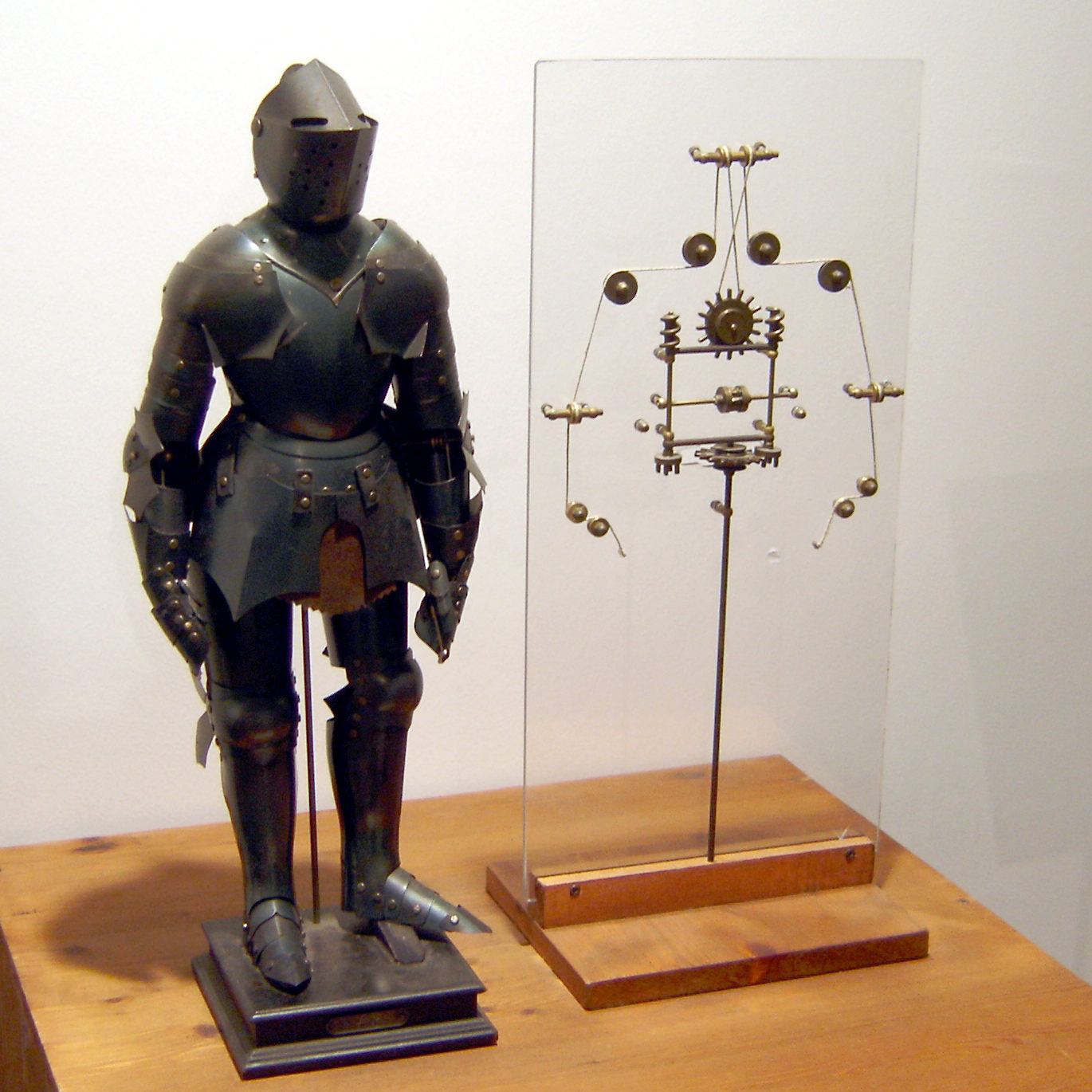
Model of a robot based on drawings by Leonardo da Vinci (Source: Wikipedia)#
In the 18th century, master toymaker Jacques de Vaucanson created an automated duck, featuring hundreds of moving parts that allowed it to eat and drink. Vaucanson later designed humanoid automatons, including a drummer and a fife player. During the 1770s, Swiss inventor Pierre Jaquet-Droz crafted automata resembling children, showcasing remarkable lifelike movements. The pinnacle of automation during this period was The Turk, devised by Wolfgang von Kempelen. This seemingly advanced machine could play chess against human opponents and traveled throughout Europe. However, it was ultimately revealed that The Turk concealed a human operator inside, controlling its moves.
In the 19th century, Japanese craftsman Hisashige Tanaka developed a range of intricate mechanical toys, including those capable of serving tea, shooting arrows from a quiver, and even painting. Meanwhile, in 1898, Nikola Tesla showcased his “teleautomaton,” a prototype for a remote-controlled boat, highlighting the potential of wireless technology.
The modern robotics where the concept of robotics is evolved with various fiction writings and plays and also integration of robotics in industry is discussed in detail in the next article “History and evolution of Robotics-II”.